

Leadership Development: Empowering Leaders Who Can Help Change Systems
For 20 years, The Nicholson Foundation worked to advance meaningful change in safety net service
systems in New Jersey. Its grantmaking journey is described in Changing Systems, Changing Lives:
Reflecting on 20 Years.
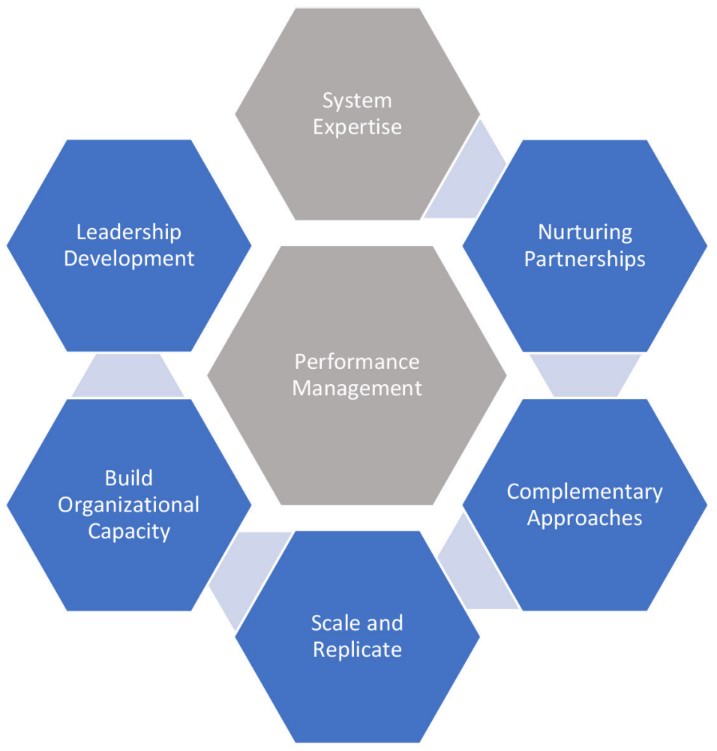
Through stories and related text, the book showed how a small family foundation could take six guiding
themes and put them into action through grants and partner support. In the process, the Foundation
spurred real systems change that benefitted individuals, families, and communities.
A recent scholarly paper built on that work, helping to make the Foundation’s approach broadly accessible to researchers, academics, and philanthropists. “A Framework for Creating Systems Change,” by Drs. William Brown and Wynn Rosser and published in The Foundation Review, presents a new model for systems change. Five of the model’s seven components reflect themes in Changing Systems, Changing Lives. The sixth component slightly shifts the emphasis of the Foundation’s “Engaging with Government” theme, and the seventh highlights the Foundation’s overall approach by including performance measurement as a distinct and separate component of the model.
This blog is part of a series that shows how the Foundation’s work aligns with the concepts from literature and practice embodied in the components of Brown and Rosser’s model.
Supporting Durable Change by Fostering Future Leaders
In the “Developing Leaders” component of their model, Brown and Rosser discuss the importance of this aspect of systems change. They describe several critical elements of this process, including the need to bring all types of future leaders to the table and to create a process that allows participants to develop their personal networks as well as their ability to work toward systems-change goals.
Here’s how the Foundation’s work exemplified this aspect of Brown and Rosser’s systems change model: The Foundation brought a broad perspective to bear on its work in leadership development. We were convinced that investing in future leaders would increase the likelihood that projects and initiatives would succeed and thrive over time. Bringing leaders together also would help identify common goals and enhance the possibility for leveraging investments across multiple systems, thereby creating opportunities for real systems change.
We invested in developing future leaders in two very different settings:
- Medicaid Academy: From 2015 to 2021, the Foundation funded four cohorts of a professional development and leadership training program for staff across New Jersey government agencies that administered Medicaid. The Academy focused on mid-level managers because they were the people who were responsible for running the crucial day-to-day programmatic, policy, regulatory, and budgetary aspects of the program.
The idea behind the Academy was to help participants improve their knowledge of the Medicaid program and better understand its challenges. In doing this, participants would be able to do their jobs better and help Medicaid work more effectively.
By the end of the Academy program, more than 130 staff had participated, and several dozen had participated in supplemental leadership development activities. One of the most valuable outcomes of the program was that participants got to meet and interact with staff from other agencies with diverse perspectives and experiences. This would never have happened without the Academy and helped to foster lasting connections and a sense of community and shared purpose.
- New Jersey Pediatric Residency Advocacy Collaborative (NJPRAC): This initiative, which was spearheaded by the 10 pediatric residency programs in the state, was designed to help pediatricians know and be engaged with the communities in which their patients lived. By involving pediatricians during their training, NJPRAC aimed to develop future community leaders who could have a genuine and long-lasting impact on the health and well-being of the children and families in their care.
Following a planning phase, each residency program established a partnership with a Family Success Center (another Foundation-funded program) in its area. The partnerships began with relationship-building events such as “Ask a Pediatrician” nights, and expanded over time in response to ideas generated by families that reflected their own needs and interests. During the COVID pandemic, the residency programs established a weekly “house call” webinar series that allowed the community to talk with a range of experts about their questions and concerns.
NJPRAC not only fostered strong bonds between these future doctors and the community but gave the doctors opportunities to share their experiences and develop relationships with each other. The success of the program also led the residency programs to launch an effort to rethink and retool their curricula to build in advocacy and community engagement content.
One could argue that a state Medicaid program and a local community both represent complex systems. Brown and Rosser cite research supporting the value of these leadership development initiatives because they gave the participants the training they needed to understand and effectively function within those systems. Brown and Rosser conclude that efforts to “build the capacity of system actors can serve as a key piece of change efforts.”
Learn More
- Read the other blogs in this A Framework into Action series:
— Elevating Best Practices and Building Evidence: Scaling and Replicating
— Finding and Nurturing Effective Partnerships: The New Jersey Health Care Quality Institute
— Finding and Nurturing Effective Partnerships: Supporting Healthy Children
— Complementary Approaches
— Buidling Organizational Capacity - Learn more about the Foundation’s leadership development initiatives:
— Medicaid Academy
— Traba C, Pai S, Bode S, Hoffman B. Building a Community Partnership in a Pandemic: NJ Pediatric Residency Advocacy Collaborative. Pediatrics 2021;147(4):e2020012252. doi: 10.1542/ peds.2020-012252 - Read Brown W, Rosser W. A Framework for Creating Systems Change. The Foundation Review, 2023;15(4):50-6. https://doi.org/10.9707/1944-5660.1678
- Order a free copy of Changing Systems, Changing Lives: Reflecting on 20 Years. This book describes the 20-year journey of The Nicholson Foundation.