

Building Organizational Capacity: Funding the Basics Can Lead to Community Transformation
For 20 years, The Nicholson Foundation worked to advance meaningful change in safety net service systems in New Jersey. Its grantmaking journey is described in Changing Systems, Changing Lives: Reflecting on 20 Years.
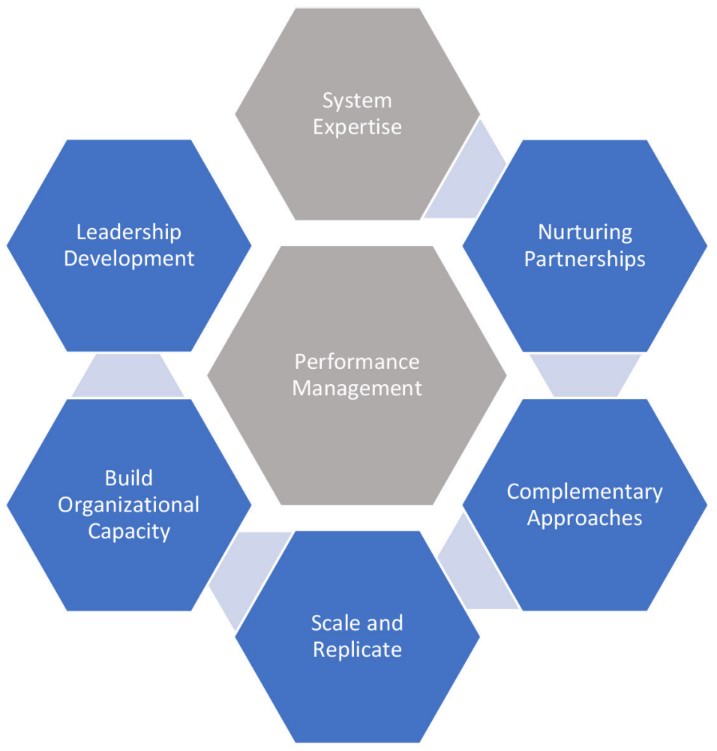
A recent scholarly paper built on that work, helping to make the Foundation’s approach broadly accessible to researchers, academics, and philanthropists. “A Framework for Creating Systems Change,” by Drs. William Brown and Wynn Rosser and published in The Foundation Review, presents a new model for systems change. Five of the model’s seven components reflect themes in Changing Systems, Changing Lives. The sixth component slightly shifts the emphasis of the Foundation’s “Engaging with Government” theme, and the seventh highlights the Foundation’s overall approach by including performance measurement as a distinct and separate component of the model.
This blog is part of a series that shows how the Foundation’s work aligns with the concepts from literature and practice embodied in the components of Brown and Rosser’s model.
Supporting Long-Term Change by Strengthening System Actors
In the “Building Organizational Capacity” component of their model, Brown and Rosser note that the capability of organizations to carry out their responsibilities and contribute to the viability of programs is fundamental to successful systems change. Sufficient capacity means that organizations can operate consistently and reliably. Further, Brown and Rosser cite research showing that investments in small nonprofits do make a difference in vital areas such as planning, evaluation, grant-writing, and taking advantage of emerging opportunities.
Here’s how the Foundation’s work exemplified this aspect of Brown and Rosser’s systems change model: In 2008, when the Foundation first began to seriously consider developing a healthcare grant program, it learned about the major challenges facing the state’s safety net healthcare system: inefficiencies in and lack of coordination across related systems, overreliance on expensive and avoidable emergency care, and a lack of access to health insurance.
It also learned about a new healthcare group in Camden that envisioned an entirely new system of care. This new system consisted of a community-based healthcare coalition grounded in multi-sector partnerships that could address the social as well as the medical needs of patients. Camden’s experience spurred the formation of similar coalitions in Trenton and Newark.
Though laudable in their goals and ambitions, the coalitions were hampered by weak organizational structures and limited capacity. In 2010, the Foundation began a major program of investment to address this challenge. Over time, the investment focused on supporting the expansion of the Trenton coalition and the initial development of two new coalitions in Paterson and Freehold Township.
The Foundation recognized that what the coalitions needed most was help with “the basics”—staff, data analysis capability, equipment, policies and procedures, and management-information infrastructure. If they had enough of these nuts-and-bolts basics, the coalitions would have sufficient capacity to carry out grant-funded activities as well as to complete everyday, yet essential, functions, such as accounting administration, and strategic planning. With the Foundation’s support, the coalitions built institutional capacity through:
- Hiring staff
- Creating Health Information Exchanges (HIEs)
- Conducting program planning and implementation initiatives
- Creating advisory boards to guide activities
- Supporting branding and communication plans
- Purchasing office equipment and supplies
HIEs are electronic data systems that allow healthcare providers to appropriately access and securely share medical information. HIEs allowed the coalitions to gather and share data about their communities, thereby helping them offer responsive services and jointly plan in strategic and efficient ways.
The Foundation’s funding helped the coalitions grow from small collaborations to well-organized, thriving entities and to evolve from an emphasis on individually-based care management to a population-based health orientation. In January 2020, Governor Phil Murphy designated the Trenton, Passaic, Camden, and Newark coalitions as Regional Health Hubs. This designation gave the coalitions a stable source of funding and put them in a strong position to serve their communities through shared data and collaborative population-based health and wellness programs as well as individually-focused services.
The Foundation’s experience with supporting community-based healthcare coalitions amply illustrates
research cited by Brown and Rosser, which suggests “that real health care reform comes from building the capacity of organizational actors” and that “without strong and reliable system actors…many systems-change efforts are stymied.”
Learn More
- Read the other blogs in this A Framework into Action series:
— Elevating Best Practices and Building Evidence: Scaling and Replicating
— Finding and Nurturing Effective Partnerships: Supporting Healthy Children
— Finding and Nurturing Effective Partnerships: The New Jersey Health Care Quality Institute
— Complementary Approaches
— Leadership Development - Learn about New Jersey’s community-based healthcare coalitions:
- Read Brown W, Rosser W. A Framework for Creating Systems Change. The Foundation Review,
2023;15(4):50-6. https://doi.org/10.9707/1944-5660.1678 - Order a free copy of Changing Systems, Changing Lives: Reflecting on 20 Years. This book describes the 20-year journey of The Nicholson Foundation.
— Health Coalition of Passaic County
— Neighborhood Connections to Health
— Greater Newark Health Care Coalition